The Ultimate Guide to Choosing Yarn for Punch Needle Art - Puzzloria
Puzzloria™ Store
The Ultimate Guide to Choosing Yarn for Punch Needle Art
Getting Started: Essential Materials for Punch Needle Art
Beginning your punch needle journey is an exciting creative adventure! To get started with punch needle art, you'll need four essential materials:
- A quality punch needle tool
- Appropriate fabric for your project
- A sturdy frame or hoop to stretch your fabric
- The perfect yarn for punching
While selecting colors and textures can be the most enjoyable part of planning your project, understanding which yarn types work best with different punch needles will significantly improve your results. Let's explore how to make the perfect match!
Understanding Punch Needle Width and Yarn Weight Compatibility
The most important factor in choosing your punch needle yarn is understanding the relationship between your punch needle width and yarn weight. This fundamental principle will guide your yarn selection:
The wider the punch needle, the thicker the yarn. The thinner the punch needle, the finer the yarn.

Punch needle tools come in various sizes to accommodate different yarn weights:
- Larger punch needles (like Puzzloria's Premium Series) work beautifully with chunky, bulky weight yarns
- Medium-sized punch needles are perfect for aran or worsted weight yarns
- Fine punch needles are designed for lightweight yarns or just a few strands of embroidery floss
Puzzloria's Versatile Collection includes adjustable punch needles with multiple tips, allowing you to use various yarn weights with just one tool—from fine embroidery threads to medium-weight yarns.

When purchasing a Puzzloria punch needle, we always include clear guidelines about compatible yarn weights to ensure you achieve the best results.
What Happens When Yarn and Needle Don't Match?
Using yarn that's too fine for your punch needle can result in:
- Difficulty controlling loop length
- Uneven loop appearance
- Excessive yarn consumption
Pro Tip: If you have a yarn you love that's too fine for your punch needle, try doubling or tripling the strands to achieve the appropriate thickness.
For reference, we recommend bookmarking the standard yarn weight system chart, which details yarn categories and their characteristics. This resource is invaluable when shopping for yarn online.
Best Yarn Options for Different Punch Needle Projects
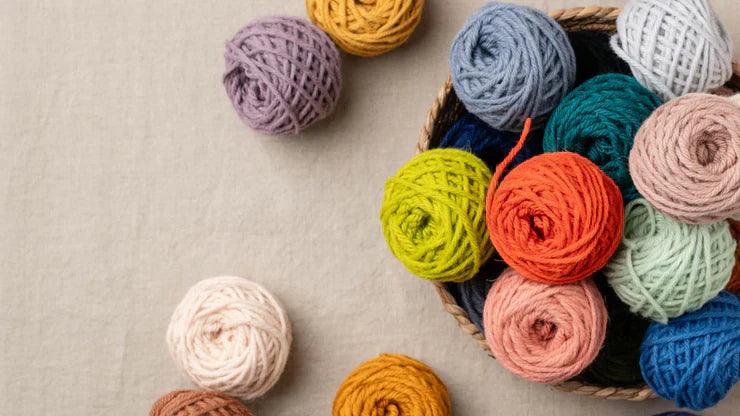
Premium Chunky Wool Yarn for Durable Creations
For long-lasting decorative pieces like rugs, wall hangings, and heavily-used items, our premium chunky wool yarn delivers exceptional durability and texture.
Why choose Puzzloria's chunky wool yarn:
- Exceptional durability for high-traffic items
- Coarse, unrefined texture creates perfect grip between loops
- Natural resilience maintains shape over time
- Creates even, well-defined loops
- Perfect for rugs, cushions, and statement pieces
Wool offers natural advantages that synthetic fibers simply can't match, including insulation properties, breathability, biodegradability, and renewability. It's the perfect choice for heirloom-quality punch needle art.
Compatibility: Use with Puzzloria Premium Series punch needles and monks cloth fabric for optimal results.

Sustainable Cotton Yarn for Versatile Projects
Our 100% cotton yarn is the perfect choice for those seeking sustainable, animal-product-free materials or for projects that require a softer touch.
Benefits of Puzzloria's cotton yarn:
- Gentle on sensitive skin—no itching or irritation
- Eco-friendly, sustainable material
- Oeko-Tex® certified—free from harmful chemicals
- Smooth feed through the punch needle with just enough grip
- Washable for practical items like coasters, placemats, and wearable art
Our aran weight cotton yarn creates beautifully defined textures while remaining soft to the touch, making it perfect for items that come in contact with skin or need occasional cleaning.
Compatibility: Ideal for Puzzloria Artistic Series punch needles and works beautifully with our premium linen or monks cloth fabrics.

Key Yarn Characteristics for Successful Punch Needle Projects
Flow and Texture Considerations
The perfect punch needle yarn should flow smoothly through your needle without snagging or slipping too freely.
Avoid these problematic yarn types:
- Overly fluffy yarns (like mohair) that catch and snag
- Novelty yarns with irregular textures or bumps
- Extremely silky yarns that lack necessary friction
When you're just beginning, choose medium-textured yarns that offer a balance between smoothness and grip. This helps you develop consistent technique without fighting your materials.
Test Tip: After threading your punch needle, gently pull the yarn back and forth to check how smoothly it moves. You want consistent, controlled movement—not too loose, not too tight.

Dealing with Yarn Knots and Joins
One of the advantages of punch needle art is that you don't need continuous yarn—making it perfect for using up yarn scraps from other projects!
Tips for handling yarn joins:
- Inspect yarn before starting and cut out any factory knots
- If loops start pulling out unexpectedly, check for hidden knots in the needle handle
- For color changes or new yarn, simply trim and begin with the new piece
Unlike knitting or crochet, punch needle doesn't require special joining techniques. Simply cut and continue with your new yarn—this makes punch needle art particularly sustainable as you can use even small quantities of beautiful yarns.
Experiment and Discover Your Signature Style
As you grow more comfortable with punch needle art, don't be afraid to experiment with different yarn types and combinations. Mix textures, weights, and materials to create unique effects that showcase your personal artistic vision.
At Puzzloria, we encourage creative exploration while providing high-quality materials that ensure your artistic vision comes to life beautifully. Our DIY Needle Art Escapes collection features carefully selected yarns, tools, and fabrics to inspire your journey.
The more projects you complete, the more you'll discover your preferences and develop your signature style. Happy punching!
Frequently Asked Questions
What yarn weight works best for punch needle projects?
Yarn weight needs to match your needle size. For a regular or bulky punch needle (like a #10), bulky weight (size 5) yarn is the go-to choice. Fine punch needles pair better with worsted or sock weight yarn. When in doubt, thread a length through your needle before starting. If it glides smoothly without resistance, the weight is right. Too tight and it will snag; too loose and your loops will not hold.
Is wool really better than acrylic for punch needle, or is that just a craft myth?
Wool genuinely earns its reputation. It grips monks cloth naturally, holds loops in place without backing glue, and can handle decades of foot traffic on a rug. Acrylic is a solid choice for wall hangings, decorative pillows, or beginner practice pieces where durability is less critical. If your project will stay on a wall or shelf, acrylic gives you more color options and costs less. If it is going on the floor, wool is the one to reach for.
What should a complete beginner actually start with?
Start with a smooth, single-ply bulky or chunky yarn in a fiber you already like. Wool roving or a wool-acrylic blend punches beautifully and forgives technique imperfections better than a slippery cotton or a fluffy mohair. Avoid novelty yarns, highly textured fibers, and anything that says 'boucle' on the label. They snag in the needle and make learning far more frustrating than it needs to be. A simple skein of smooth bulky yarn on monks cloth is the fastest path to a clean first project.
Can you blend colors when doing punch needle, and how does it work?
Yes, and it is one of the best things about working with yarn. The simplest method is threading two thinner strands through the needle at once, mixing colors or tones for a marled effect. You can also punch adjacent rows of different colors and let them blend optically from a distance, which is great for creating gradients or shadows in a design. Wool takes dye in a way that gives you rich, varied hues even within a single skein, so variegated wool is another easy way to add depth without swapping colors constantly.
How do you wash a finished punch needle piece?
It depends on your fiber. Wool pieces should be hand washed in cool water with a gentle soap, then laid flat to dry. Hot water and agitation cause wool to felt, which will permanently distort your loops. Acrylic projects are more forgiving and many can go in a gentle machine wash on cold, though checking the yarn label first is always smart. For wall hangings, spot cleaning is usually enough. If you used a backing adhesive or frame your piece, washing by hand is the safest route regardless of fiber.
How much yarn do you actually need for a punch needle project?
A useful rule of thumb for regular-size needles is that one 4 oz. skein covers roughly a 9-inch circle of monks cloth. For finer needles, about 1.3 yards of worsted weight fills one square inch. The safest approach is to buy a little more than you think you need, especially for background colors that cover large areas. Running out of a specific colorway mid-project and not being able to match it exactly is a genuinely annoying problem that a spare skein prevents entirely.
Does monks cloth work with all yarn types, or are some fibers a bad fit?
Monks cloth has an open, even weave that works with most yarns, but the fiber still needs to move through your needle cleanly. Silky or very slippery yarns tend to pull out of loops rather than staying put. Very fuzzy fibers like straight mohair can catch on the fabric and resist punching. The sweet spot is a smooth, slightly grippy fiber, which is exactly why wool punches so well on monks cloth. If you want to experiment with unusual fibers, test a small swatch before committing to a full project.